Pragmatism Cybrary
Visit the Cybrarian John Shook
Pragmatism is a movement in American philosophy
which began in the 1870s with the Metaphysical Club. Read about the history of pragmatism and get introductions to pragmatism and pragmatists.
cybrary halls
 Cybrary Home
 Research Center
 Pragmatism Genealogy
 Centers and
Societies
Centers and
Societies
 Find Pragmatists
pragmatists
organizations
Society for the Advancement of
American Philosophy
Institute for American Thought
Institute for Studies in Pragmaticism
Centro de Estudos em Filosofia Americana
Frederick L. Will
All his books and related materials about his pragmatic realism have been posted by Kenneth Westphal here:http://illinois.academia.edu/FrederickLWill
American Institute for Philosophical and Cultural Thought
The American Institute for Philosophical and Cultural Thought, located near Carbondale, Illinois, fosters the study of philosophical and cultural thought in America by collecting and archiving literary and educational resources, providing access to those resources to scholarly researchers, and disseminating education about American philosophical and cultural thought. AIPCT maintains an organized archival library, consisting of approximately 35,000 donated books and collections of papers, and also purchased items using monetary donations. AIPCT encourages the use of these research materials by permitting scholars to access them at the Institute, located near Carbondale, Illinois. AIPCT will also foster other kinds of scholarly activities, such as workshops, website information, online conferencing, and academic publishing, relating to its educational mission.
Contemporary Pragmatism Book Reviews
Recent books are available for reviewing. Book reviews are typically 1,000 to 1,500 words in length, and longer reviews for volumes of collected chapters are welcome. To receive a book review assignment, contact jrshook@buffalo.edu to obtain the style guidelines. Visit the journal's homepage at Brill: www.brill.com/products/journal/contemporary-pragmatism
EVENTS
See the Peirce Society calendar and the SAAP calendar.
CALL FOR PAPERS
Summer Seminar on the Future of Philosophical Practice:
University of North Carolina at Asheville
Friday July 14, 2017 to Sunday July 16, 2017
DEADLINE FOR ABSTRACTS: Monday May 15, 2017
We invite abstract submissions (600 words) to read a 30-minute paper on
the Main Program. The local hosts are Brian E. Butler and Grace
Campbell. They are collecting the 600-word abstracts for committee
consideration. Please submit your proposals to his address (bbutler@unca.edu).
He can also answer questions about local accommodations.
Theme:
This summer seminar brings together a "continental congress" of
philosophers, and other related stakeholders, to discuss the future of
philosophical practice (within and beyond the academy). We are
interested in any paper proposal that engages with our theme, broadly
construed. For example:
Genealogies of the problems facing professional philosophy
Philosophy beyond the traditional philosophy department
The economics of practicing philosophy (e.g. philosophical coaching, and
other models)
The role of public philosophy in an uncertain age
Intersectional, decolonized, and other alternatives to mainstream
philosophy
Reading, Teaching, Practice: Philosophical Curriculum in the Twenty
First Century
In addition to our regular conference schedule, other activities are
planned such as:
A Society of Philosophers in America (SOPHIA) panel. SOPHIA will host a
panel intended to introduce people to what we do. SOPHIA's mission is to
build communities of philosophical conversation, locally, nationally,
and online. We will invite key local community members to come talk
about "Ethics at the End of Life." We will begin our discussion with a
short reading: "It's Over Debbie," on the basis of which we will all be
on the same page. For more information about SOPHIA and our panel, visit
PhilosophersInAmerica.com, or email Executive Director Eric Thomas Weber
at etweber@gmail.com.
A Philosophy Pilot Program Working Group: a working group, led by
Leonard Waks and Eli Kramer, meeting throughout the weekend, to plan the
foundations for a new pilot philosophy program. The goal is to create a
program that can address the structural, fiscal, and economic problems
facing the current professional model of doing philosophy. The working
group will create a steering committee to continue after the meeting.
The Philosophy Pilot Program Workshop will start with an evening
introductory meeting on Thursday July 13, 2017. If you are interested in
participating in the working group contact Eli Kramer at Eliornerkramer@gmail.com.
Further details on the working-group schedule will be provided in
May/June.
The American Institute of Philosophical and Cultural Thought (AIPCT) (www.americanphilosophy.net)
will host an informational and discussion panel about the future of
cultural thought, as a whole, led by Randall Auxier of Southern Illinois
University Carbondale.
editorial
The Eclipse of pragmatism?
There has been much talk of pragmatism's "eclipse" during analytic philosophy's greatest dominance from 1950 to 1990. The myth must be corrected: pragmatism was never eclipsed. While pragmatism was a prominent competitor with rival neo-idealisms and new realisms during the first two decades of the 20th century, pragmatism had few representatives across the top twenty philosophy departments. Already quite marginalized in the 1920s and 1930s, the handful of pragmatist professors such as Dewey at Columbia and Mead at Chicago encouraged many of their students to go into psychology, sociology, anthropology, linguistics, education, and economics. Many of the best new minds favorable towards pragmatism strongly influenced the social sciences during the 1940s - 1980s.
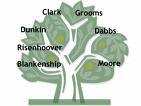
In philosophy departments, pragmatism remained marginalized. However, Harvard and Columbia were still fairly pragmatic and carried on the debate. C.I. Lewis, Morton White, and W.V. Quine at Harvard, along with Ernest Nagel, Signey Morgenbesser, and Isaac Levi at Columbia, each pursued some pragmatist themes. Many of their students have in turn defended selected pragmatist views, much diluted and transformed, but still consistent with pragmatic naturalism (eg. views seen in Putnam, Davidson, Dennett, Churchland, etc). Supplemented by the efforts of renegade analytic philosophers such as Richard Rorty, pragmatism remained marginalized, yet very potent and defended by a few major figures at prominent philosophy departments. Visit The Genealogy Center for details. When philosophy became more interdisciplinary in the 1990s, its encounters with linguistics, anthropology, cognitive science, semiotics, etc., brought it back into contact with flourishing pragmatist views.
In summary, pragmatism has been a small but potent philosophy before and after WW II. Its contemporary vitality is enhanced by philosophy's re-engagement with the social and cognitive sciences. --J.S.
Where do Pragmatists Come From?
Nearly 300 scholars are included in the Cybrary's lists of philosophy professors whose research and teaching interests include pragmatism. Where did they come from? Which doctoral programs turn out graduates who learned about pragmatism and maintained that interest in their careers? The Pragmatism Cybrary won't rate PhD programs for quality or job placement, but these numbers let you draw your own conclusions. Note that most of these programs have turned out pragmatists for generations.
Columbia University, 19. Fordham University, 14. Southern Illinois University, 13. Vanderbilt University, 12. Pennsylvania State University, 11. University of Chicago, 11. Saint Louis University, 10. SUNY at Stony Brook, 10. University of Notre Dame, 10. Yale University, 10. Boston University, 9. Harvard University, 9. Princeton University, 8. University of Pennsylvania, 8. Emory University, 7. Purdue University, 6. University of Texas, 6. Boston College, 5. Claremont Graduate University, 5. Loyola University, Chicago, 5. University of Miami, 5. University of Oregon, 5. City University of New York, 4. Tulane University, 4. Univ. of Illinois at Urbana-Champaign, 4. University of Michigan, 4. University of Western Ontario, 4.
Spotlight: Pragmatism in Philosophy of Mind
Pragmatism was the original functional psychology and cognitive science that (1) explains intelligence in terms of deliberate purposive conduct, and (2) explains knowledge as successful predictions about manipulating nature. Experience and mind are not limited to, or reducible to, brain events -- experience, mind, and the like are evolving natural systems of organism-environment transactions.
You can read defenses of some or all of these principles in the recent works of
Andy Clark (Edinburgh,
UK), Susan Hurley (Bristol, UK),
Alva Noë (UC Berkeley,
USA), Mark Rowlands
(Hertfordshire, UK), Robert Wilson
(Alberta, CAN), and Teed Rockwell
(Sonoma, USA).
--J.S.
point of interest
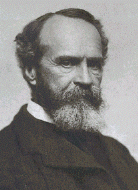
Pragmatism asks its usual question. "Grant an idea or belief to be true," it says, "what concrete difference will its being true make in anyone's actual life? How will the truth be realized? What experiences will be different from those which would obtain if the belief were false? What, in short, is the truth's cash-value in experiential terms?" -- Pragmatism (1907)
Click here to find out more.